



Chain of Custody in Drone-Based Inspection: How Evidence Integrity Holds Up Under Contractual Dispute
Infrastructure Data Lab · March 2025 · Reading time: ~9 min
What makes aerial inspection data admissible and defensible in warranty disputes or regulatory audits — and why most drone survey outputs do not meet the standard.
Categories:
Abstract: Drone-based inspection data is increasingly used as evidence in contractual disputes, warranty assessments, and regulatory proceedings related to road infrastructure. Its evidentiary value — how well it withstands expert challenge — depends not on the quality of the imagery alone, but on the integrity of the chain of custody from aerial capture to final report. This article sets out what chain of custody means in the inspection context, identifies the specific metadata, process, and storage requirements that determine evidentiary robustness, examines how expert witnesses assess inspection data under cross-examination, and describes the practical documentation standards that distinguish legally defensible inspection records from commercially produced photographs.
1. What 'Chain of Custody' Means for Inspection Data
In forensic and legal contexts, chain of custody refers to the documented, unbroken sequence of possession, handling, and storage of evidence from the moment of collection to its presentation in proceedings. The concept originated in physical evidence handling — ensuring that a seized item could not have been tampered with between collection and trial — and has been extended to digital evidence under frameworks such as ISO/IEC 27037 (Guidelines for Identification, Collection, Acquisition and Preservation of Digital Evidence).
For drone-based infrastructure inspection, chain of custody encompasses four distinct phases, each with its own documentation requirements:
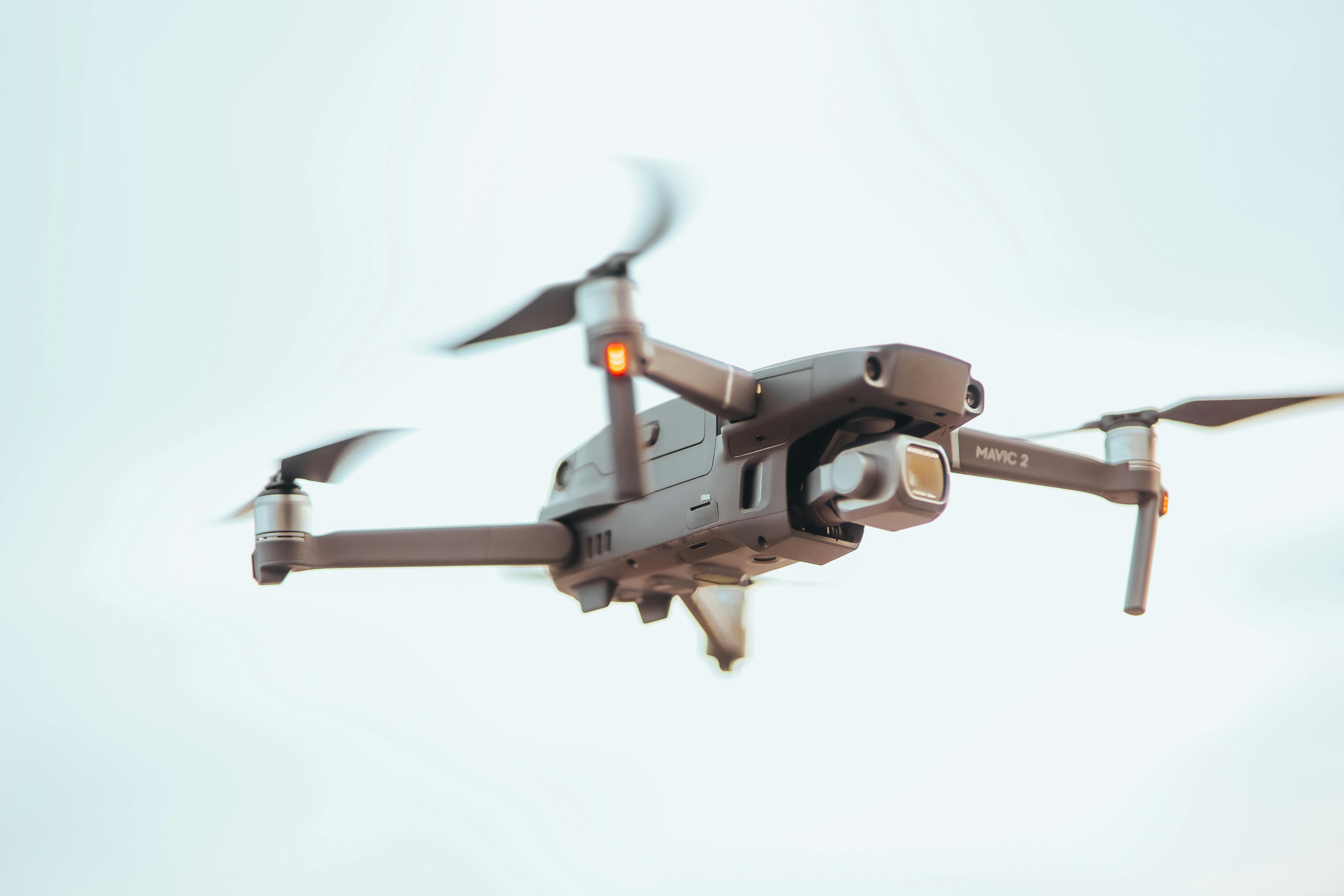
- Capture: Who conducted the flight, under what operator licence, on what date, with what equipment, and under what atmospheric and visibility conditions. Flight logs, operator credentials, and EASA registration documentation are the evidentiary anchors for this phase.
- Processing: Which software platform processed the raw imagery, which AI model version performed classification, what confidence thresholds were applied, and whether any manual review or override of automated outputs occurred — and by whom, with what qualification.
- Output generation: How the structured defect dataset was produced from the processed imagery, in what format, with what coordinate reference system, and whether any post-processing manipulation occurred between automated output and final report.
- Storage and retrieval: Where and how the data is stored, who has access, what audit log records access events, and whether the storage system provides tamper-evident integrity verification (e.g., cryptographic hash of files at ingestion).
An inspection output that lacks complete documentation for any of these phases can be challenged on provenance — the opposing party can argue that the data may have been altered, misinterpreted, or selectively presented between collection and submission.

2. The Specific Metadata Requirements
At the image level, each captured frame should carry the following embedded EXIF/XMP metadata for evidentiary purposes:
- Timestamp: UTC timestamp accurate to the second, derived from GPS time synchronisation — not the drone's internal clock, which may drift. GPS-derived timestamps are verifiable against flight logs and are not subject to manual manipulation.
- GNSS coordinates: Latitude, longitude, and altitude for each captured frame, with recorded positioning accuracy estimate (HDOP/PDOP values or RTK/PPK solution quality flag). Positional accuracy directly affects the defensibility of claims about defect location.
- Sensor and flight parameters: Focal length, aperture, ISO, shutter speed, sensor model, and serial number. These parameters are required for independent verification of ground sampling distance, which determines the minimum detectable defect size (see Article 3 in this series for the GSD-detection relationship).
- Operator reference: A field linking the image to the specific licensed operator and flight record. This establishes the qualified human in the chain who bears legal responsibility for the aerial operation under EASA Regulation (EU) 2019/947. [1]
At the processing level, the following must be documented and retained:
- AI model version and release date: Defect classification outputs are model-dependent. If the model is subsequently updated or retrained, the version that produced the output in question must be identifiable and reproducible.
- Confidence threshold settings: The minimum confidence score at which a detected instance was included in the output dataset. This is critical when a dispute turns on whether a specific defect was or was not present at inspection time — a borderline detection at 51% confidence is analytically different from one at 95%.
- Human review log: If any automated output was reviewed, confirmed, or overridden by a human analyst, this must be recorded with the analyst's identity, qualification, and the date of review.
3. How Expert Witnesses Assess Inspection Data
In infrastructure disputes that reach arbitration, adjudication, or civil litigation, the opposing party will typically retain a qualified expert — a civil or geotechnical engineer with pavement inspection experience — to assess the evidentiary value of the inspection data presented.
The expert assessment follows a predictable sequence, targeting the weakest link in the documentation chain:
- Methodology challenge: Was the inspection conducted at a resolution (GSD) adequate to detect the defect category in dispute? If the claim is that a longitudinal crack was present at inspection time but was missed, the expert will calculate whether the survey GSD was below the minimum detection threshold for that crack width. A survey conducted at GSD 3 cm/px cannot be said to have 'inspected' 3 mm cracks.
- Temporal authenticity challenge: Can it be proven that the data was captured on the claimed date? Without GPS-synchronised timestamps and verifiable flight logs, an opposing expert can raise reasonable doubt about when the survey was actually conducted — particularly relevant in warranty disputes where the inspection date determines liability allocation.
- Classification reliability challenge: What is the documented false positive and false negative rate of the AI classification model for the defect type in question? Models with published validation accuracy are more defensible than those where classification methodology is described only in marketing terms.
- Continuity challenge: Has the data been modified, filtered, or selectively presented between the original survey output and the evidence submitted? Without a tamper-evident storage system and a complete audit log, this challenge is difficult to refute definitively.
Expert witnesses in infrastructure disputes are experienced in identifying documentation gaps. A technically impressive inspection platform that does not generate and retain the above documentation provides its client with commercial value but limited legal protection.
Inspection data that cannot answer 'who captured this, when, how, and has it been modified' is a photograph with a timestamp. It is not evidence in the legal sense of the term.

4. Regulatory and Contractual Contexts Requiring Evidentiary-Grade Data
Several regulatory and contractual frameworks in the European infrastructure sector now explicitly or implicitly require inspection data that meets evidentiary standards:
- Performance-based road contracts (PBRCs): Under availability payment and output-based contracts, the concessionaire's payment is conditional on demonstrated compliance with condition thresholds. Inspection data submitted as compliance evidence is subject to challenge by the contracting authority or independent engineer. Data without chain of custody documentation cannot reliably support compliance claims.
- EU-funded infrastructure projects (ESIF, CEF): Projects co-financed under EU structural funds or the Connecting Europe Facility are subject to audit by the European Court of Auditors and national audit bodies. Construction acceptance documentation — including inspection surveys — must demonstrate provenance and methodology compliance. [2]
- Defects liability periods: In FIDIC and NEC-based construction contracts, the defects liability period (typically 12–24 months post-completion) requires that any defect notification be supported by documented evidence of the defect's existence, location, and severity. Inspection data used to trigger DLP notifications must survive contractor challenge.
- Insurance and warranty assessments: Pavement warranty claims under manufacturer or contractor performance bonds require documented evidence of the claimed defect condition at a specific point in time. Insurers and bond issuers routinely retain expert engineers to challenge the evidentiary basis of claims.

5. Practical Implementation: What a CompliantSystem Looks Like
Implementing evidence-grade chain of custody for drone inspection data does not require forensic laboratory infrastructure. It requires disciplined process design and appropriate platform architecture:
- Flight log integration: Drone flight management software (e.g., DJI FlightHub, UgCS, or equivalent) generates machine-readable flight logs with timestamped GPS tracks. These logs must be automatically ingested into the inspection platform and linked to the corresponding image dataset at upload.
- Cryptographic integrity: SHA-256 or equivalent hash values computed for each raw image file at upload, stored in an immutable log. Any subsequent modification of the file changes its hash — providing tamper-evidence without requiring manual custodial handling.
- Model version pinning: Inspection platforms must maintain versioned AI model releases and record which model version processed each dataset. Reprocessing with an updated model should create a new output record, not overwrite the original.
- Access audit logging: All access to raw data, processed outputs, and reports must be logged with user identity, timestamp, and action. Audit logs must be stored separately from the data they reference and must not be modifiable by platform users.
- Structured retention policy: Raw imagery, flight logs, processing records, and reports retained for a minimum of five years — ten years for projects subject to EU audit obligations. Retention schedules must be formally documented and technically enforced, not merely stated in a service agreement.
These requirements are not onerous for a platform designed with evidentiary use in mind. They represent the difference between a data management system and a document management system — and in the context of infrastructure disputes, that difference determines whether the inspection investment translates into legal protection for the client.
Conclusion
The evidentiary value of drone inspection data is not determined by the quality of the imagery or the sophistication of the AI classification model alone. It is determined by the integrity and completeness of the chain of custody from the moment of capture to the moment of presentation as evidence.
Most commercially produced drone inspection outputs — PDF reports with condition scores and representative photographs — satisfy project reporting requirements but would not survive expert scrutiny in a contractual dispute. The gap between a reporting output and an evidentiary record is a set of process and metadata requirements that are entirely achievable with purpose-designed inspection platforms.
For infrastructure owners, concession operators, and road authorities who use inspection data to manage significant contractual and financial obligations, the question of whether their inspection records meet evidentiary standards is not academic. It is the question that determines their exposure in the disputes that will, with statistical certainty, eventually arise.
References
[1] European Union Aviation Safety Agency (EASA). Regulation (EU) 2019/947 on the rules and procedures for the operation of unmanned aircraft. Official Journal of the European Union, L 152, 11 June 2019, pp. 45–71.
[2] European Court of Auditors. (2020). Special Report 16/2020: Road Infrastructure in the EU: Time to Gear Up to Meet Social, Economic and Environmental Challenges. Luxembourg: Publications Office of the European Union. DOI: 10.2865/386613.
[3] ISO/IEC 27037:2012. Information Technology — Security Techniques — Guidelines for Identification, Collection, Acquisition and Preservation of Digital Evidence. Geneva: International Organization for Standardization.
[4] FIDIC. (2017). Conditions of Contract for Construction (Red Book), Second Edition. Geneva: Fédération Internationale des Ingénieurs-Conseils.
[5] Sacks, R., Brilakis, I., Pikas, E., Xie, H.S. & Girolami, M. (2020). 'Construction with digital twin information systems.' Data-Centric Engineering, 1, e14. DOI: 10.1017/dce.2020.16.