


Our projects

General Road Quality Inspection

Straight road leading into horizon

Overview

Road networks deteriorate gradually and unevenly. Identifying defects at an early stage — before minor surface damage becomes a structural failure — requires inspection at a frequency and scale that traditional methods cannot sustain cost-effectively. IDL's General Road Quality Inspection service provides highway authorities, road operators, and asset owners with a systematic, AI-driven approach to continuous pavement monitoring across entire network segments.

Rather than relying on periodic manual surveys that produce inconsistent, inspector-dependent results, our platform converts drone-captured aerial imagery into a structured, georeferenced database of pavement conditions — updated on a schedule aligned with your maintenance and budget cycle.

The Challenge

Managing extended road networks requires more than reactive maintenance. Authorities and operators face several compounding problems with conventional inspection approaches:

  • Manual inspections are slow, costly, and introduce subjective variability between inspectors and survey periods.
  • Defects identified late require significantly more expensive intervention than those caught in early stages.
  • Inconsistent data formats make it difficult to compare conditions across sections, contractors, or years.
  • Regulatory and contractual obligations require documented evidence of network condition that manual records rarely provide in structured, auditable form.

The result is a chronic gap between actual network condition and decision-makers understanding of it — leading to inefficient resource allocation, deferred maintenance, and elevated risk.

Rural road through hills under cloudy sky
Aerial view of dry landscape with winding paths

Solution

IDL deploys licensed drone operators to conduct systematic aerial surveys of defined road segments. Imagery is captured at standardised altitude, overlap, and resolution parameters to ensure consistent data quality across all survey epochs. The raw data is uploaded to our cloud- based processing platform, where proprietary computer vision models classify and measure defects automatically.

The system evaluates each road segment across a comprehensive set of condition indicators:

  • Pavement surface defects — cracking (longitudinal, transverse, fatigue/alligator), potholing, ravelling, and surface deformation
  • Rutting depth and lane geometry deviations
  • Road edge and shoulder condition, including erosion and drop-off
  • Drainage infrastructure visibility and obstruction indicators
  • Signage, delineation, and road furniture condition

Each defect is georeferenced, classified by type and severity, and assigned a condition score against predefined quality criteria. The output is a complete, segment-level compliance dataset — not a PDF of photographs, but structured data directly usable in asset management systems.

Where multiple survey epochs exist, the platform performs automated change detection: identifying sections where deterioration has accelerated, quantifying the rate of degradation, and flagging segments approaching intervention thresholds. This transforms inspection data into a predictive maintenance input.

Reporting & Outputs

Following each survey, the platform generates:

  • A georeferenced defect inventory with severity classification and photographic evidence for each identified anomaly
  • Segment-level condition scores against applicable pavement quality indices
  • A network-level condition map suitable for maintenance prioritisation
  • Change detection analysis for repeat surveys, showing deterioration rates by segment
  • Structured PDF reports formatted for regulatory submission, contractual documentation, and internal management review

All raw imagery, processing outputs, and reports are stored securely within the platform for a minimum recommended retention period of five years, providing a defensible evidence base for audits, warranty claims, and dispute resolution.

Key Outcomes

70%

reduction in
inspection time

40%

cost savings vs.
manual methods

97%

precision in
defect classification

50 sec.

from scan
to results

Results

  • Objective, repeatable condition assessments that eliminate inspector-to-inspector variability
  • Early defect detection enabling lower-cost preventive intervention
  • Auditable digital evidence base for regulatory compliance and contract management
  • A scalable monitoring capability that grows with your network obligations

Applicable Contexts

  • National and regional motorway network monitoring
  • Municipal road condition assessments for budget planning
  • Post-construction baseline surveys before handover
  • Warranty period monitoring for newly constructed or resurfaced roads
  • Post-event damage assessment following extreme weather or incidents

Road Marking Analysis

Road surface with lane markings close-up

Overview

Road markings are a primary safety communication channel between infrastructure and road users. Faded centre lines, misaligned lane boundaries, or incorrectly positioned prohibition markings do not merely represent a compliance failure — they directly influence driver behaviour and contribute to accident risk. Yet verifying marking quality across extended road networks has historically depended on slow, subjective, and legally fragile manual inspection processes.

IDL's Road Marking Analysis service provides a rigorous, AI-powered platform for the automated verification of road markings against design specifications, national standards, and tolerance thresholds — at any scale, with results available within 50 seconds of data upload.

The Challenge

Road marking inspection is operationally complex for several reasons that make conventional approaches inadequate:

  • New construction requires verification against approved design drawings — a precise spatial task that manual inspection cannot perform reliably across kilometres of alignment.
  • Renewal and repainting introduces cumulative positional drift over successive cycles, creating geometric deviations that accumulate below the threshold of visual detection but exceed regulatory tolerances.
  • Safety-critical markings — overtaking prohibition zones, pedestrian crossings, junction approach lines — require especially precise placement verification, with documented evidence that a specified marking was correctly positioned at a specific station.
  • Disputes between road authorities and contractors frequently arise from the absence of objective, georeferenced inspection records at the point of acceptance.
Winding road through open countryside
Road inspection visualization with detected objects

Our Solution

IDL's platform addresses marking inspection through two differentiated analytical scenarios, applied depending on whether the markings under review are newly installed or previously existing.

Scenario A — New Markings vs. Design Compliance

For newly constructed or freshly marked pavements, the system verifies actual marking positions against uploaded project design layers (GIS/CAD files, design alignment files, or georeferenced drawings).

Detected markings are cross-referenced with design specifications to confirm:

  • Correct type and classification of marking at each station
  • Geometric position within permitted deviation tolerances
  • Continuity and completeness of line segments
  • Correct placement of safety-critical elements, including overtaking prohibition zones, stop lines, and directional arrows

Scenario B — Renewed Markings vs. Standards Tolerances

For repainted or restored markings, absolute positional comparison against original design is often impractical. Instead, the platform applies a standards-based geometric conformity assessment within permitted tolerance bands.

This approach detects:

  • Cumulative positional drift from repeated repainting cycles
  • Width and geometry deviations outside permitted tolerances
  • Retroreflectivity degradation indicators where multi-spectral imagery is available
  • Faded, missing, or partially obscured marking segments

In both scenarios, when GPS metadata is embedded in the drone imagery, marking elements are automatically georeferenced to the project alignment. Where GPS accuracy is insufficient, the platform supports manual referencing to chainages, stations, or design alignment files — ensuring full analytical utility regardless of hardware limitations or site conditions.

Reporting & Outputs

Each completed Road Marking Analysis produces:

  • A georeferenced marking inventory with compliance status (conforming / non-conforming) for each detected element
  • Detailed deviation reports identifying the nature, location, and magnitude of each non-conformance
  • Photographic and geometric evidence records for every flagged irregularity
  • A structured PDF compliance report formatted for formal project acceptance, contractual submission, or regulatory filing
  • Optional comparison overlays displaying detected marking positions against design layers for visual validation

All evidence — raw imagery, analytical outputs, georeferenced data, and final reports — is retained within the platform for five years, providing a chain-of-custody record suitable for dispute resolution and legal proceedings.

Key Outcomes

50 sec.

from scan
to results

97%

defect
precision

70%

faster than
manual survey

40%

cost
savings

Results

  • Objective, documented compliance verification replacing subjective on-site evaluation
  • Legally defensible inspection records available at the point of project acceptance
  • Early identification of cumulative drift before safety-critical tolerances are exceeded
  • Reduced contractor-client disputes through transparent, georeferenced evidence

Applicable Contexts

  • New construction acceptance — verification of road markings before project sign-off
  • Routine maintenance compliance — periodic re-assessment of marking condition across the operational network
  • Post-repainting verification — confirmation that renewal work meets geometric standards
  • Safety audit support — independent evidence for safety-critical marking placements
  • Concession and PPP monitoring — ongoing compliance documentation for long-term infrastructure contracts

Railway Infrastructure Monitoring

Industrial plant with smokestacks and infrastructure

Overview

Railway infrastructure operates under some of the most demanding safety and reliability requirements of any engineered asset class. Track geometry defects, ballast displacement, vegetation encroachment, and deteriorating drainage structures can all compromise operational safety — yet the very nature of active rail operations makes traditional inspection methods costly, infrequent, and operationally disruptive.

IDL's Railway Infrastructure Monitoring service enables continuous, non-disruptive aerial inspection of rail corridors using AI-driven drone analytics. The platform delivers structured condition data and documented maintenance intelligence without requiring track access closures, specialised inspection vehicles, or interruption to scheduled services.

The Challenge

Railway operators, infrastructure managers, and concession holders face a specific and compounding set of inspection challenges:
  • Track walks and ground-based inspections are time-intensive and require safety-critical track access arrangements that constrain inspection frequency.
  • Specialised inspection trains provide high-quality geometric data but are expensive to deploy and limited in scheduling flexibility.
  • Vegetation management, drainage monitoring, and embankment surveillance typically rely on periodic visual inspections with no consistent data capture or trend analysis.
  • Regulatory obligations increasingly require documented, evidence-based maintenance records — a standard that informal visual inspection cannot reliably meet.
  • The interval between inspections means that progressive defects — gradual ballast shift, slow embankment movement, creeping vegetation — are often identified only after they have reached a critical or service-affecting stage.
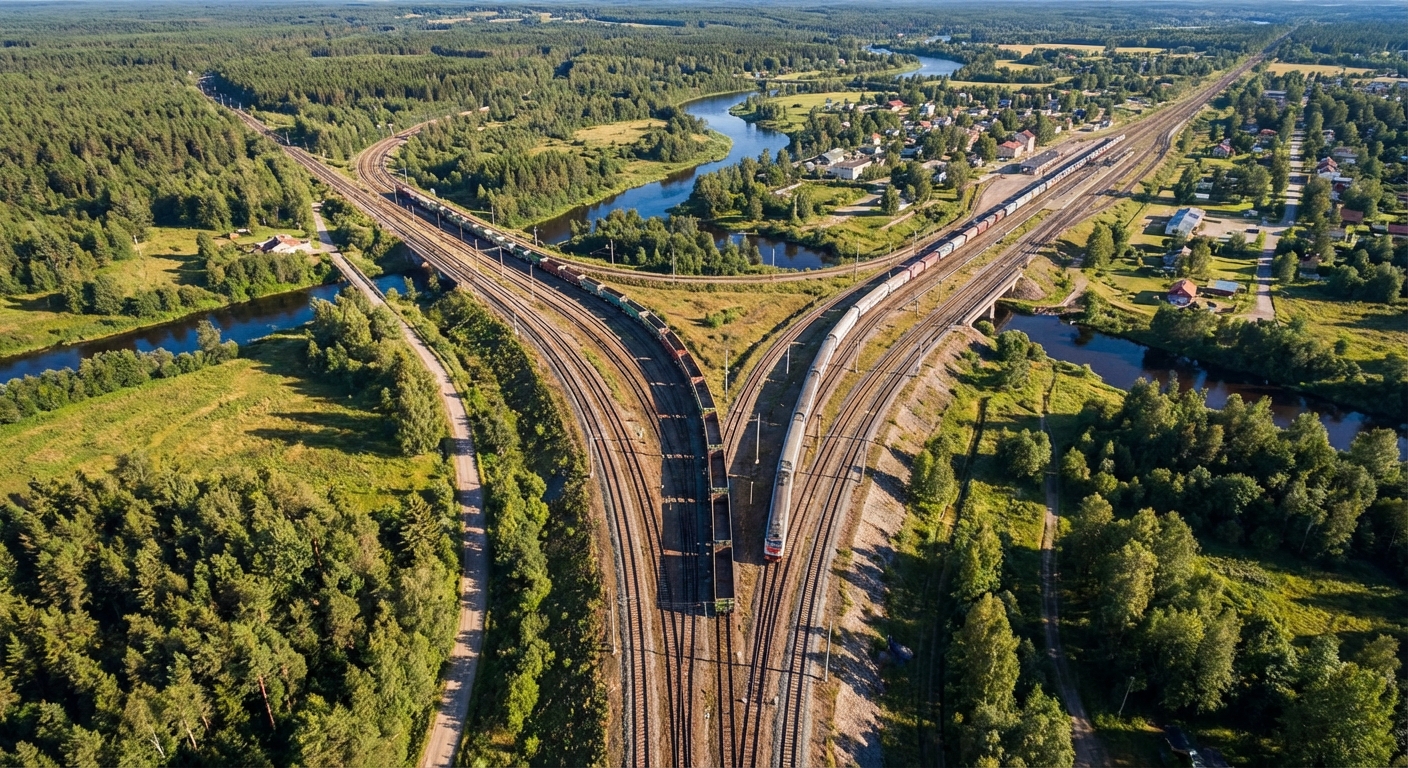
Aerial view of highway junction through forest
Railway tracks with surrounding greenery

Our Solution

IDL deploys certified drone operators to conduct aerial surveys of rail corridors at defined intervals — monthly, quarterly, or seasonally — according to the asset criticality and maintenance cycle of the client. Flights are planned and executed in full compliance with applicable aviation regulations and railway safety protocols, with no interference to live operations.

High-resolution imagery and video are captured along the full corridor width, including track, formation, embankments, drainage features, and adjacent vegetation zones.

Data is processed by AI models specifically trained on railway asset classes, delivering:

  • Track alignment irregularities — lateral and vertical deviations from design geometry
  • Rail surface defects — visible wear, spalling, corrugation, and joint deterioration
  • Ballast condition — displacement, contamination indicators, and voids
  • Sleeper and fastener damage — cracking, displacement, and missing components
  • Drainage structures — blockage indicators, erosion, and invert condition
  • Embankment stability — slope erosion, surface movement, and settlement indicators
  • Vegetation encroachment — growth within clearance envelopes and proximity to OHL or signalling equipment
  • Signage, delineation, and trackside furniture condition

Each asset element is classified, georeferenced to track chainage, and assigned a condition rating. Where multiple survey epochs are available, the platform performs automated change detection — quantifying the rate of deterioration for each element category and flagging assets approaching intervention thresholds. This enables maintenance teams to transition from reactive repair to planned, evidence-based intervention.

Reporting & Outputs

Following each survey cycle, the platform delivers:

  • A georeferenced asset condition inventory, classified by element type, severity, and maintenance priority
  • Change detection analysis comparing current conditions against prior survey epochs
  • Maintenance prioritisation data ranked by urgency and safety criticality
  • Structured inspection reports suitable for submission to railway safety regulators and infrastructure managers
  • Photographic evidence records for every identified defect, linked to track chainage reference
  • A secure, searchable archive of all survey data retained for a minimum of five years

Reports are formatted to align with the client's maintenance management system requirements and applicable national railway infrastructure standards.

Key Outcomes

70%

reduction in
inspection time

0

service
disruptions

97%

detection
precision

5 yr

evidence
retention

Results

  • Continuous monitoring without operational disruption or track access closures
  • Early identification of progressive defects before service-affecting or safety-critical thresholds are reached
  • Documented, regulator-ready evidence base supporting maintenance compliance obligations
  • Transition from reactive maintenance to planned, data-driven intervention scheduling
  • Reduced dependence on expensive specialised inspection vehicles and manual track walks

Applicable Contexts

  • Main line and high-speed corridor periodic condition monitoring
  • Regional and branch line infrastructure management under concession agreements
  • Post-construction handover inspections for newly commissioned track
  • Vegetation and encroachment management programmes
  • Embankment and drainage surveillance in geotechnically sensitive zones
  • Regulatory compliance documentation for national railway safety authorities

Site Monitoring & Change Detection

Aerial view of highway interchange and road network

Overview

Large-scale construction projects, critical infrastructure sites, and sensitive land areas share a common challenge: conditions on the ground change continuously, and the consequences of undetected change — whether a structural deviation, an encroachment, or a security breach — can be severe and costly to reverse. Traditional site monitoring relies on infrequent walk-arounds, static CCTV, and manual photographic records that provide incomplete, inconsistent, and legally fragile evidence.

IDL's Site Monitoring & Change Detection service provides a systematic, evidence-based alternative. Through scheduled drone surveys combined with AI-powered comparison analysis, the platform creates a continuous, time-stamped visual record of any defined area — automatically identifying, documenting, and classifying material changes between survey epochs.

The Challenge

Clients responsible for managing active construction sites or critical infrastructure zones face a consistent set of monitoring failures with conventional approaches:

  • Physical site inspections are episodic and cannot cover large or complex areas consistently within a single visit.
  • Manual photographic records lack the spatial accuracy, metadata integrity, and comparability needed to serve as formal evidence in contractual or legal contexts.
  • Gradual changes — slow earthwork deviations, incremental encroachments, progressive structural shifts — accumulate between inspections and are difficult to attribute to a specific time window without systematic baseline data.
  • Construction programme milestones are difficult to verify objectively, creating disputes between clients, contractors, and subcontractors over progress and quality.
  • Security-relevant changes — unauthorised access, material removal, or boundary encroachments — often go unrecorded in the absence of systematic aerial surveillance.
Curved highway with vehicles in countryside
Drone flying over road at sunset

Our Solution

IDL establishes a repeatable aerial survey programme for each monitored site, with flight frequency calibrated to the pace of activity and the client's risk profile — ranging from weekly surveys on active construction projects to monthly or quarterly overflights for slower-changing infrastructure or land areas.

Each survey follows a standardised flight plan to ensure precise spatial alignment with prior epochs, enabling pixel-accurate change detection. The resulting dataset is processed by AI models that automatically compare current conditions against the established baseline or the most recent prior survey, identifying and classifying changes across the full site footprint.

The platform monitors and documents:

  • Earthwork and excavation progress — cut and fill volumes, slope conditions, compaction areas, and deviations from approved grading plans
  • Structural construction progress — foundation completion, structural steel erection, formwork installation, and envelope closure milestones
  • Material storage and logistics — stockpile changes, equipment movement, and material delivery or removal
  • Site boundary integrity — perimeter fence condition, access point status, and detection of unauthorised incursions
  • Environmental compliance indicators — sediment control installation, vegetation clearance limits, and drainage conditions
  • Safety-critical conditions — proximity of activity to exclusion zones, unprotected excavation edges, and temporary works condition
  • Long-term land surface changes — subsidence indicators, slope movement, and drainage pattern shifts for infrastructure protection zones

Each detected change is georeferenced, timestamped, classified by category and significance, and linked to photographic evidence. The platform generates a change log that constitutes a defensible, time-ordered record of site conditions — suitable for construction programme verification, contractual dispute resolution, regulatory reporting, and insurance assessment.

For projects requiring milestone-based payment verification or phased acceptance, the platform can be configured to produce progress certification outputs aligned with the contract's progress schedule — providing independent, AI-verified evidence of completion status at each stage.

Reporting & Outputs

Each monitoring cycle delivers:

  • A georeferenced change detection report identifying all material changes since the prior survey, classified by type and significance
  • Annotated aerial imagery with change highlights and comparison overlays against baseline or prior epoch
  • A cumulative change log for the full project duration, providing a complete audit trail of site evolution
  • Progress verification reports for construction milestone certification where required
  • Security and boundary integrity summaries for infrastructure protection programmes
  • Structured PDF reports and raw data exports formatted for integration with project management, legal, or insurance systems

All imagery, analytical outputs, change logs, and reports are retained securely within the platform for five years, providing a comprehensive, legally defensible evidence archive for the entire monitoring period.

Key Outcomes

100%

site coverage
per survey

Weekly

minimum survey
frequency

5 yr

evidence
retention

40%

cost savings vs.
manual monitoring

Results

  • Complete, time-stamped visual documentation of site conditions across the full project duration
  • Early identification of deviations from approved plans before they become costly or contractually significant
  • Legally defensible change evidence supporting dispute resolution, insurance claims, and regulatory compliance
  • Independent, AI-verified construction progress data reducing reliance on self-reported contractor updates
  • Scalable coverage of large or geographically complex sites that manual inspection cannot survey consistently

Applicable Contexts

  • Major infrastructure construction — motorways, railways, bridges, and tunnels requiring continuous progress and quality monitoring
  • Industrial and energy projects — power plant construction, wind farm development, and pipeline installation monitoring
  • Critical infrastructure protection — airport perimeters, utility corridors, data centre campuses, and border infrastructure
  • Environmental compliance monitoring — active quarries, landfill sites, and flood risk zones requiring periodic condition certification
  • Urban development — large residential or commercial development sites requiring milestone verification and neighbour dispute documentation
  • Post-disaster or post-incident assessment — rapid change detection following flooding, landslide, or structural events